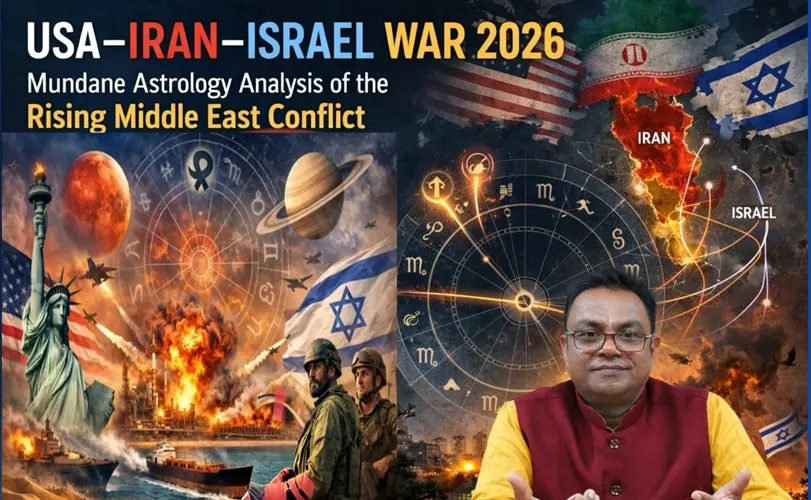
The USA–Iran–Israel conflict in 2026 is not just another geopolitical event—it is a defining moment in the evolution of global power dynamics. While mainstream narratives focus on military strikes, defense systems, and retaliation cycles, a deeper structural shift is unfolding beneath the surface.
This is not simply a war. It is a transition phase in global order.
For years, tensions between the United States, Iran, and Israel have been building through strategic rivalry, nuclear concerns, and regional dominance. What we are witnessing now is the visible outcome of that accumulated pressure.
The real question is not whether conflict exists.
The real question is:
What global transformation is this conflict accelerating?
Understanding the Core Triggers
This conflict has emerged from multiple interconnected layers:
- Long-term geopolitical rivalry in the Middle East
- Strategic control over energy routes and oil supply
- Security concerns around nuclear capabilities
- Shifting alliances in a multi-polar world
These factors have now converged into a situation where limited actions have escalated into a broader confrontation with global implications.
Why This Conflict Matters Beyond the Middle East
The impact of the USA–Iran–Israel conflict extends far beyond the region itself. Global energy markets, international trade routes, inflation trends, defence spending, cybersecurity, and diplomatic alliances can all be affected by prolonged instability. Investors, businesses, policymakers, and ordinary citizens often experience indirect consequences through rising costs, market volatility, and geopolitical uncertainty.
Current Situation: Escalation Beyond Borders
The conflict has already moved beyond isolated incidents. Key developments indicate a rapidly intensifying environment:
- Targeted strikes on critical infrastructure
- Expansion of drone and cyber-based warfare
- Military mobilization across the region
- Heightened alert levels in Gulf nations
One of the most critical strategic points in this entire situation is the Strait of Hormuz—a narrow passage through which a significant portion of the world’s oil supply flows.
Any disruption here has immediate consequences:
- Volatility in global oil prices
- Pressure on inflation and supply chains
- Economic instability across multiple regions
A Mundane Astrology Perspective: Timing, Not Fear
It is important to approach astrology with clarity and responsibility. Astrology does not create events—it reflects timing patterns.
In 2026, several strong planetary influences indicate a period of pressure, restructuring, and transformation.
Mars Influence – Acceleration of Conflict
Mars represents action, assertion, and military energy. When activated strongly:
- Decisions tend to be fast and aggressive
- Diplomatic processes weaken
- Conflicts escalate rapidly
This aligns with the speed and intensity of current developments.
Saturn Influence – Structural Pressure
Saturn governs systems, institutions, and authority structures. Its activation often correlates with:
- Pressure on existing global systems
- Shifts in leadership and governance
- Restructuring of alliances
Historically, such periods coincide with major geopolitical transitions.
Rahu Archetype – Unconventional Warfare
Rahu represents unpredictability and innovation. In modern geopolitical terms, this translates into:
- Drone and AI-assisted warfare
- Cyber operations and intelligence conflicts
- Psychological and narrative-driven warfare
This explains why the current conflict feels complex and non-linear. It is not a traditional war—it is a hybrid strategic conflict.
Ground Reality: Beyond Astrology
It is essential to remain grounded in reality.
This conflict is driven by:
- Energy security
- Regional dominance
- Strategic deterrence
- Political and military decision-making
Astrology simply reflects when these pressures reach a critical threshold.
Strategic Outlook: What Happens Next?
Short-Term (0–3 Months)
- Continued tactical strikes
- High military readiness
- Controlled escalation without full-scale global war
Medium-Term (3–12 Months)
- Increased diplomatic engagement through global mediators
- Economic pressure becoming a key factor
- Attempts at controlled de-escalation
Long-Term Perspective (2025–2030)
This conflict is part of a broader global restructuring phase where:
- Power is shifting from centralized dominance to multi-polar systems
- Economic and technological influence becomes more important than territorial control
- New alliances and global frameworks begin to emerge
The Deeper Question Most People Miss
The common question is:
“Who will win?”
But a more intelligent question is:
“What new global system will emerge after this conflict?”
Modern conflicts are no longer just about land or borders. They are about:
- Narrative control
- Economic influence
- Technological leadershipOne of the most significant consequences of prolonged conflict is economic uncertainty. Rising energy prices, disruptions to shipping routes, defence expenditure, and supply-chain pressures can influence inflation and economic growth worldwide. Historical conflicts in strategic regions have often produced ripple effects across financial markets, commodity prices, and investor sentiment.
Economic and Market Impact
Beyond military developments, the economic consequences remain equally important. Energy prices, shipping routes, inflation trends, and global market sentiment often react quickly to geopolitical tensions. For businesses, investors, and policymakers, monitoring these economic indicators may be just as important as following battlefield developments.
Final Insight
The USA–Iran–Israel conflict of 2026 represents more than a regional war. It is a signal of global transformation.
Old systems are weakening.
New systems are forming.
The outcome of this phase will shape geopolitical, economic, and strategic realities for the coming decade.
People Also Ask
Could the USA–Iran–Israel conflict affect global oil prices?
Yes. The Strait of Hormuz remains one of the world’s most important energy corridors. Any disruption can influence oil prices, shipping costs, inflation, and global markets.
Could this conflict impact India?
India may experience indirect effects through higher energy prices, increased transportation costs, and changes in global trade flows.
Is there a risk of wider regional escalation?
The possibility of broader escalation remains a concern for policymakers and geopolitical analysts, particularly if diplomatic efforts fail to reduce tensions.
Why is the Strait of Hormuz important?
A significant share of global energy supplies passes through this strategic waterway, making it critical to international trade and energy security.
How does mundane astrology analyse geopolitical events?
Mundane astrology studies collective cycles, national trends, and long-term geopolitical patterns rather than focusing on individual events.
USA Iran Israel War 2026 FAQ
1. What is the USA–Iran–Israel conflict about?
The conflict involves geopolitical, military, security, and strategic tensions among the United States, Iran, and Israel. It has implications for regional stability, global energy markets, international diplomacy, and economic security.
2. Could the USA–Iran–Israel conflict lead to a wider regional war?
The possibility of wider escalation remains a concern. However, diplomatic negotiations, military developments, and international involvement will play a major role in determining future outcomes.
3. Why is the Strait of Hormuz important in the USA–Iran–Israel conflict?
The Strait of Hormuz is one of the world’s most critical energy corridors. A significant portion of global oil and liquefied natural gas exports passes through this narrow waterway. Any disruption can affect oil prices, shipping costs, inflation, and global economic stability.
4. Could this conflict affect global oil prices?
Yes. Geopolitical tensions in the Middle East often influence energy markets. Supply disruptions or threats to major shipping routes can contribute to higher oil prices and increased market volatility.
5. Could this conflict impact India?
India could experience indirect effects through rising energy prices, inflationary pressures, transportation costs, and changes in international trade flows.
6. How can geopolitical conflicts affect the global economy?
Geopolitical tensions can influence energy markets, supply chains, commodity prices, investor confidence, financial markets, and economic growth across multiple regions.
7. What is hybrid warfare?
Hybrid warfare combines conventional military action with cyber attacks, information warfare, economic pressure, drone technology, and strategic influence campaigns.
8. What is mundane astrology?
Mundane astrology is a specialised branch of astrology that studies nations, governments, political developments, economic cycles, global events, and collective trends rather than individual horoscopes.
9.How does mundane astrology analyse geopolitical events?
Mundane astrology studies long-term planetary cycles, national charts, collective trends, and historical patterns to identify periods of geopolitical change, economic shifts, and social transformation.
10. How should individuals respond during periods of geopolitical uncertainty?
Maintaining financial discipline, avoiding panic-driven decisions, staying informed through reliable sources, and focusing on long-term planning are generally the most practical approaches during periods of global uncertainty.
About Ashok Aacharya:
Ashok Aacharya is a premium Spiritual Wellness Strategist, Global Trends Analyst, and Vedic Science Researcher. Since 1990, he has served as a trusted strategic advisor to an elite global network of corporate leaders, high-performing entrepreneurs, and HNWIs, specializing in spatial sovereignty and macro-level predictive analysis. His expert insights, television debates, and trend forecasts are regularly featured across premier national and global media platforms, including The Times of India, Business Standard, Speaking Tree, Zee News, News Nation, News India 24×7, and Amar Ujala. Discover more corporate insights and strategic advisory services directly at https://ashokaacharya.com